
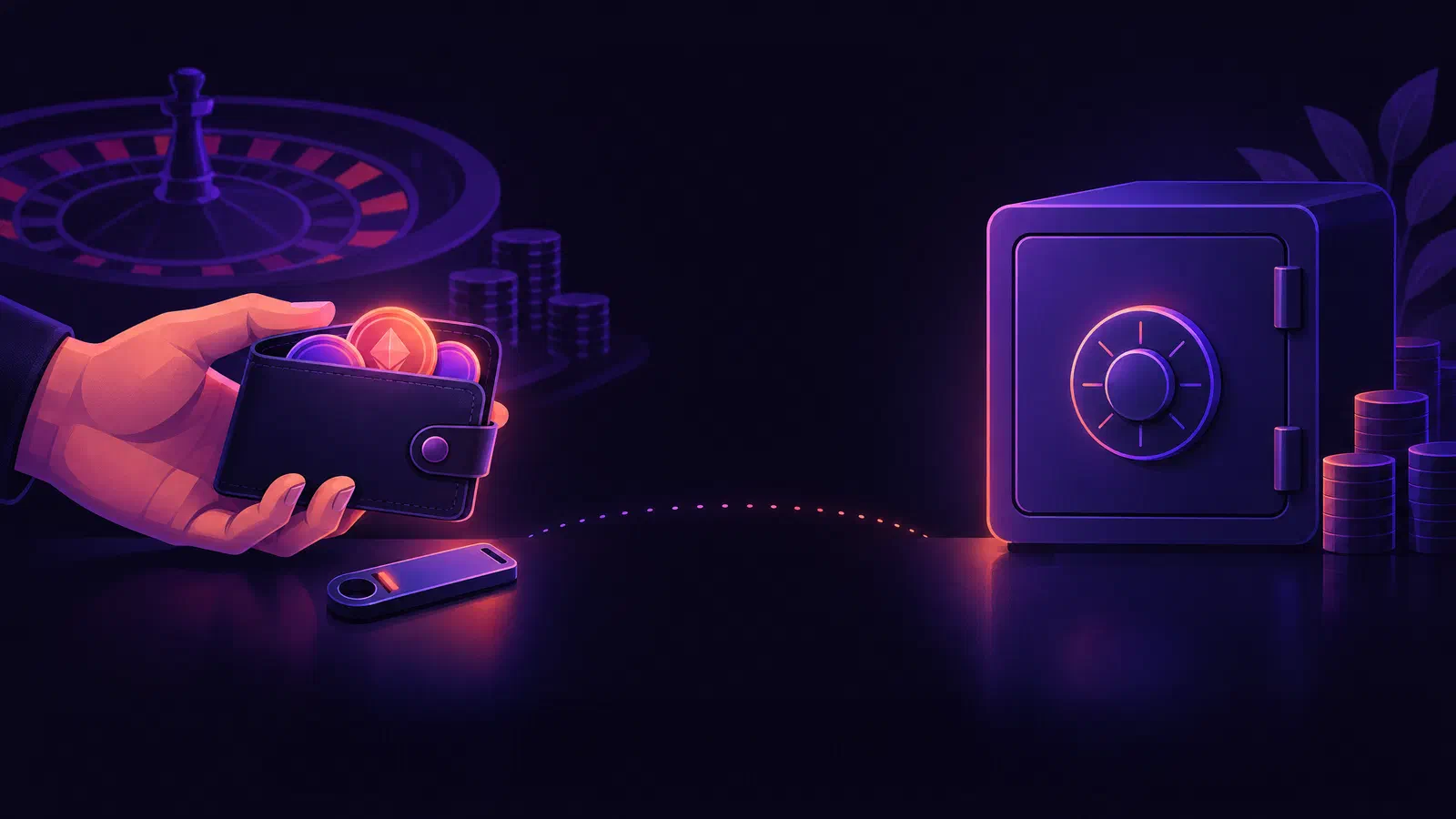
A casino screen can show a balance you can't move. A wallet screen can show funds you accidentally give someone else permission to spend. Both look like money under your control, but the risks differ.
A self custody wallet lets you hold the keys that authorize transactions instead of relying on an operator to release a casino balance. That's useful control. It also means a lost backup or careless signature can become your problem to solve. For an adult choosing to gamble, the sensible setup is a small, separate playing wallet with a budget decided before the first bet.
What a self custody wallet changes about casino balances
Say you leave money on a conventional casino account after an evening's play. Your account displays the amount, but getting it back depends on the operator honoring the withdrawal. The practical question is who controls the funds between bets.
DefiPlay is a blockchain casino whose published model uses wallet-direct play on Polygon, with each bet recorded as a public blockchain transaction rather than a prefunded casino balance. That makes custody relevant before you choose a game. Our explanation of wallet-direct crypto casinos describes this model; it should still be assessed separately from a game's rules and contract risks.
The SEC's 2025 custody bulletin explains that wallets store private keys, not the crypto assets themselves. Those keys authorize transactions involving assets recorded on the blockchain. With self-custody, you manage the keys; with third-party custody, someone else controls access to them.
Wallet-direct play avoids parking an unspent bankroll in an operator's account. It doesn't make a wager risk-free. Funds you authorize a contract to spend, or commit to a bet, remain subject to that contract's behavior. An address balance also says nothing about the game's fairness. Keep custody, permissions and gambling odds as separate checks.
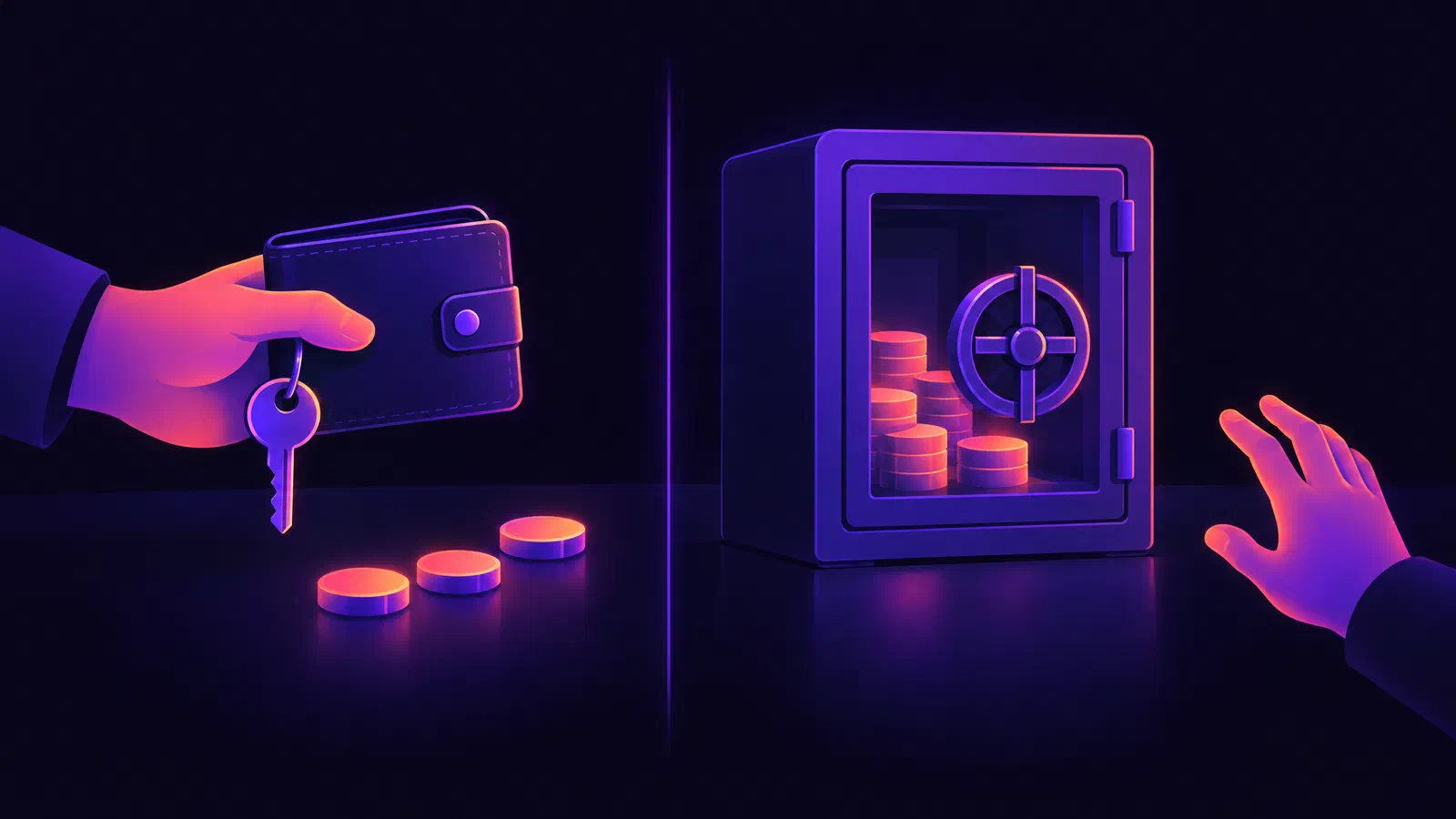
A displayed balance cannot protect you from a custodian's failure
Imagine finishing a session, clicking withdraw and finding that withdrawals have stopped. You can still see the balance. You can't use it. That's counterparty risk: another party may fail to meet its obligation to you.
Wikipedia's account of the 2014 Mt. Gox collapse records that the bitcoin exchange filed for bankruptcy protection in Tokyo on February 28, 2014. It initially reported about 850,000 bitcoins missing, including customer and company holdings. After roughly 200,000 bitcoins were found in an old wallet in March, the reported shortfall fell to about 650,000 bitcoins.
These are rounded historical reports, not exact audited totals. The arithmetic is 850,000 − 200,000 = 650,000 BTC. Finding coins in an old wallet wasn't the same as returning them to customers.
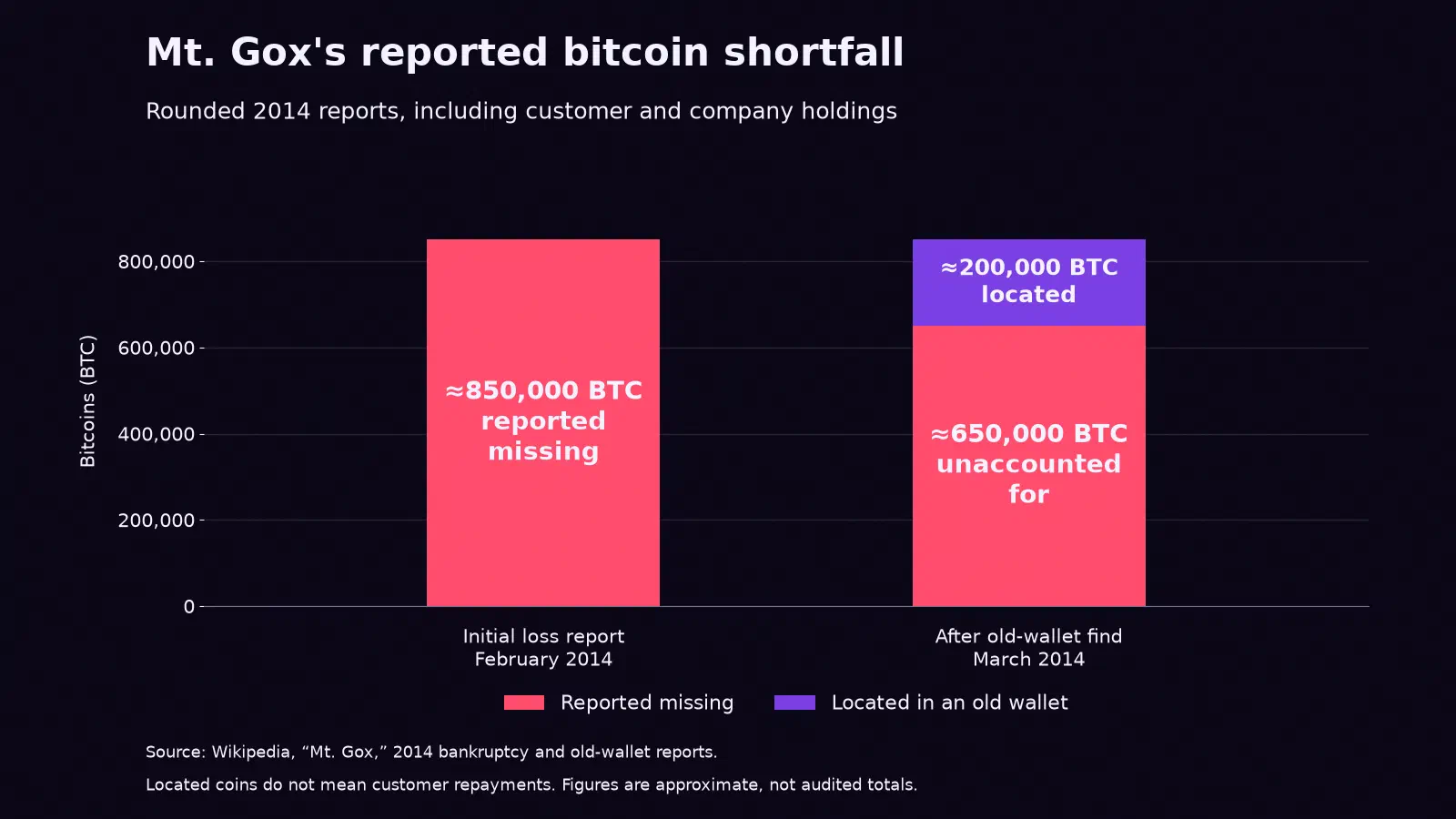
Mt. Gox was an exchange, not a casino. Its failure doesn't establish a casino failure rate. It demonstrates why an account statement and direct control of assets are different things. The SEC's 2025 bulletin makes the broader point: a custodian's hack, shutdown or bankruptcy can leave you without access to your assets.
Your practical test is narrow: does this service require you to hand over a balance that you'll later need permission to withdraw? Avoiding that dependency removes one risk. It doesn't answer whether the contract can safely handle a wager; our guide to reading a smart contract audit covers that separate question.
Separate the playing keys from your savings keys
A browser wallet holding your long-term savings is a poor place to experiment with unfamiliar game contracts. Say you connect the same account that holds your savings because switching accounts feels inconvenient. A mistaken approval can expose much more than tonight's budget.
A separate self custody wallet gives you a smaller account to inspect and a smaller balance to put at risk. Keep savings outside the account you connect to games, and don't import your savings recovery phrase into the playing setup.
A second address isn't always a second security boundary. Pieter Wuille's BIP-32 standard, published in 2012, describes deriving a tree of keys from a single seed. Where accounts share that seed, exposing it can expose the accounts together. Separate addresses help with bookkeeping; independently generated recovery phrases also separate the backups.
For a fresh setup, obtain the wallet from its verified official distribution channel rather than a search advertisement. Create a new wallet, record its recovery phrase, complete its backup check, and label the account clearly. DefiPlay's MetaMask installation guide and other-wallet connection help explain the interface steps. Never enter a recovery phrase into a game's connection form.
Separate keys still have limits. Malware on a device that can access both wallets may threaten both. Keep the savings keys out of the everyday browser environment where possible. The SEC's 2025 bulletin explains the trade-off: internet-connected hot wallets offer convenient transactions but expose users to cyberthreats, while cold storage brings its own physical loss and damage risks.
Fund a fixed loss budget, not an open-ended session
A small wallet can become a large loss if you keep refilling it. Say you promise yourself a quiet evening's play, then make another transfer after losing the first balance. The wallet didn't enforce the promise.
Choose your limit in money you can afford to lose, before buying or transferring tokens. Here's an illustrative allocation: you have $100 of discretionary money, choose a $60 maximum gambling loss, and set aside $10 for transfer and transaction costs. The working is $100 − $60 − $10 = $30 left unfunded, so at most $70 worth goes into the playing wallet.
The $10 is a chosen cost reserve, not a quoted Polygon fee. Actual costs may differ, and token prices can change the dollar value of what you hold. Check costs before transferring; if they exceed the reserve, reduce the gambling allocation or skip the session. Don't turn a fee surprise into a larger budget.
That $60 loss limit needs a written rule. Before each wager, keep the stake within the unused part of the loss budget. Stop once cumulative gambling losses reach it, and don't reload during the session. Set a time limit too. If winnings leave you with more money, they don't have to enlarge the amount you're willing to lose. You can stop and move the surplus out instead.
There's a security distinction here: the fee reserve is also money in the account. A stolen key could expose the whole funded balance, not just the amount you intended to gamble. Small balances reduce the possible damage; they don't create a technical spending lock.
Custody can't improve a game's odds. House edge still applies, as our house edge explanation discusses. If a limit starts feeling negotiable, leave the game and use the support options on our responsible gambling page.
Treat the seed phrase as the account's recovery key
A phone breaks, and your backup turns out to be a screenshot on that same phone. Or someone posing as support asks for the phrase to repair a connection error. Both situations turn a recoverable inconvenience into a possible loss.
The SEC's 2025 bulletin explains that a seed phrase can restore a wallet after loss or damage and says to keep it secure and never share it. For a seed-based wallet, a practical approach is an offline physical record stored somewhere private and protected from damage. Avoid photos, email drafts and cloud notes: they introduce more places from which the phrase might escape.
The order of the words matters. Use the wallet's own backup-verification process before funding it. Don't test recovery through a website someone sends you. If you decide to test a full restore, do it before adding funds and only inside software you've independently verified.
Your app password and recovery phrase do different jobs. Changing the app password doesn't undo disclosure of the phrase. If the phrase is exposed, treat the associated keys as compromised; another address derived from that same backup won't solve the problem. Any response involving remaining assets needs a fresh, independently generated wallet and a device you trust.
Support can explain an interface. It doesn't need your recovery secret. That's a useful boundary to keep even when you're tired and a transaction appears stuck.
Read token approvals as standing spending permissions
A wallet prompt appears before a game interaction, and you approve it because the amount looks like a technical detail. Later, you add more tokens to the same account. An old permission may still apply to that new balance.
The ERC-20 standard, created in 2015, defines an allowance: the amount a named spender may transfer from your account. Its approve function authorizes spending up to a limit; transferFrom lets an authorized spender move tokens. Approval isn't itself a wager, and it doesn't necessarily transfer tokens immediately.
Where an ERC-20 approval is requested, inspect the network, token contract, spender address and amount. Compare the spender against an independently verified contract reference, rather than accepting a familiar-looking name in a popup. A smaller allowance limits what that spender can take through this mechanism. It doesn't protect against a stolen key or another authorization you sign.
Some interactions use a native coin rather than an ERC-20 token, so this particular allowance workflow may not appear. Don't assume every wallet-direct game requires an approval, or that every game uses the same spender. Assess the prompt you actually receive.
Prefer a limited allowance for the intended action where the interface supports it. Unlimited permissions reduce repeat approvals but increase exposure to future balances. ERC-20 also recommends that interfaces set an existing allowance to zero before replacing it with another nonzero amount, to address a known approval-change race condition. Follow a supported wallet flow rather than improvising contract calls.
A gas-free signature also deserves scrutiny. Martin Lundfall's ERC-2612 standard, created in 2020, lets a signed permit authorize a token allowance. Its deadline limits when the permit can be submitted; it doesn't automatically make the resulting allowance expire. If the message's purpose is unclear, don't sign it.
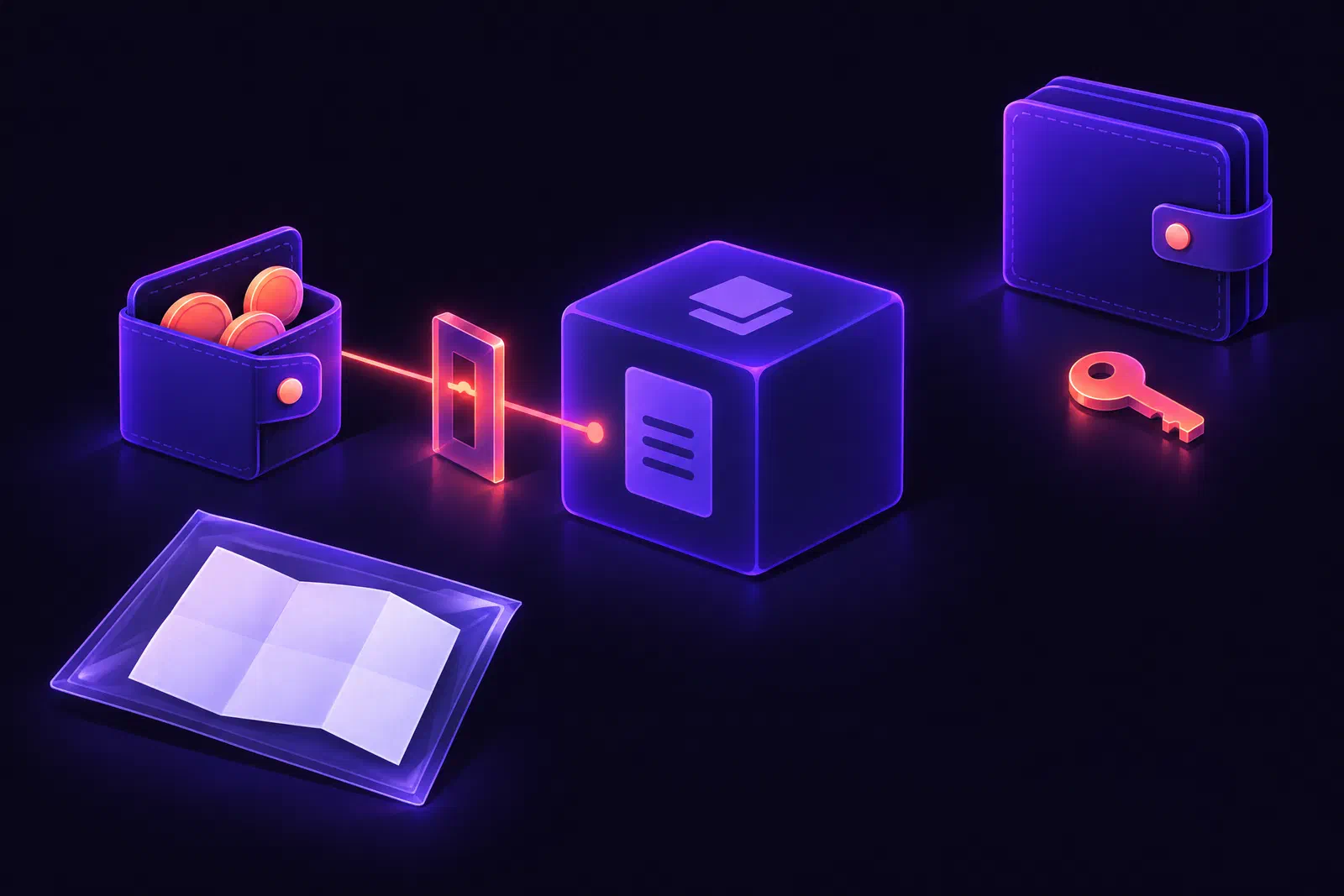
Disconnecting leaves an on-chain allowance unchanged
You close the game tab and disconnect your wallet, then assume the session's permissions have ended. But an ERC-20 allowance is recorded by the token contract, not by the browser connection.
Revocation changes that on-chain allowance, usually by setting it to zero. Disconnecting doesn't call the token contract, so it doesn't perform the same job. Use a verified wallet allowance interface or a verified explorer tool for the correct network, inspect the spender, and review the proposed revocation transaction before confirming it.
Wait for confirmation and check the remaining allowance afterward. The account needs enough native coin for the transaction fee, so leaving no fee balance can complicate cleanup. Revoking access can't reverse transfers that already happened. Nor can it repair an exposed private key. Those require different responses.
A small playing balance works only if you keep it small
An account starts with a sensible limit, then slowly becomes your everyday wallet as winnings and unrelated transfers accumulate. The original separation has disappeared without a dramatic mistake.
Keep the self custody wallet for play limited to its stated purpose. Review leftover funds and allowances after the session, keep savings keys separate, and stop rather than refill when the loss limit is reached. Wallet-direct play removes dependence on an operator-held balance. Your lasting protection comes from limiting what the playing account holds and what you've authorized others to spend.
Frequently asked questions
What is a self custody wallet?
A self custody wallet gives you control of the private keys that authorize transactions for your account. The wallet manages keys rather than storing coins inside the app. You are responsible for backups and for checking what you sign.
Is playing from a wallet safer than keeping a casino balance?
It removes reliance on an operator to return an unspent, prefunded casino balance. It does not remove smart-contract risks, harmful approvals, gambling losses or the risk of losing your keys. The contract and the wallet setup still matter.
Does disconnecting my wallet revoke token approvals?
No. Disconnecting a website does not change an ERC-20 spending allowance already recorded on the blockchain. You need a confirmed revocation transaction on the relevant network, then a check that the remaining allowance is zero.
Should a playing wallet use a different seed phrase?
A separate recovery phrase prevents exposure of the playing wallet's phrase from directly revealing the savings wallet's keys. A second address under the same phrase can separate balances, but it does not isolate that shared backup. A compromised device can still threaten both wallets if it can access both.
Sources
- SEC, Crypto Asset Custody Basics for Retail Investors, 2025
- Wikipedia, Mt. Gox: 2014 collapse and bankruptcy
- Pieter Wuille, BIP-32: Hierarchical Deterministic Wallets, 2012
- Fabian Vogelsteller and Vitalik Buterin, ERC-20: Token Standard, 2015
- Martin Lundfall, ERC-2612: Permit Extension for Signed Approvals, 2020